NLC India Limited’s Journey in Sustainable Mine Restoration

RSD- Bharat news: NLC India Limited (NLCIL), a Navratna Public Sector Enterprise under the Ministry of Coal, Government of India, has achieved significant milestones in sustainable mining and environmental restoration through systematic mine reclamation and ecological development initiatives across its lignite mining projects. With a focus on responsible mining and environmental sustainability, the company has undertaken large scale physical and biological reclamation of mined out areas. Overburden dumps and backfilled land have been gradually transformed into green landscapes, eco-parks, water bodies and productive agricultural zones, demonstrating how mined landscapes can be restored for ecological and community benefit.
Large-Scale Mine Reclamation
NLCIL’s reclamation efforts have resulted in significant restoration of mined land. As on 28 February 2026, the company reported a total mined-out area of 6,571 hectares, of which 3,236 hectares have been physically reclaimed and 2,866 hectares biologically reclaimed. Plantation activities have also been extensive, with 33.95 lakh saplings planted in mine areas.
Mine Areas Transformed into Eco-Tourism Destinations
Reclaimed mine areas at Neyveli have been transformed into eco-tourism destinations. The Mine-I Eco Tourism Park was inaugurated on 23 July 2020 during the Vriksharopan Abhiyan by the then Union Home Minister. Subsequently, the Mine-II Eco Tourism Park was inaugurated on 19 August 2021 by the then Union Minister of Coal, Mines and Parliamentary Affairs. These eco-tourism parks feature eco-friendly boating facilities in artificial lakes created in mine refill areas, landscaped gardens and orchards, bird-watching areas, deer enclosures, nurseries and mist chambers. Cultivation fields have also been developed on reclaimed overburden land. The reclaimed mined-out lands of NLCIL, including Mine-I and Mine-II, have gradually evolved into thriving ecological habitats, attracting a diverse range of wildlife. These restored landscapes now host around 107 species of migratory birds, reflecting the ecological potential of reclaimed mining areas. Among the species observed are the Asian Koel (Eudynamys scolopacea), Black-headed Munia (Lonchura malacca), Black Kite (Milvus migrans), Asian Paradise Flycatcher (Terpsiphone paradisi), Asian Green Bee-eater (Merops orientalis), and Asian Brown Flycatcher (Muscicapa dauurica). To further promote eco-tourism, NLCIL signed an MoU with the Pondicherry Tourism Development Corporation on 5 October 2022. The Mine Eco-Tourism facility was subsequently opened to the public on weekends and holidays on 2 October 2025.
Maru Udyan: Where Industrial Progress Meets Nature
The “Maru Udyan – A Desert Eco Park,” developed by NLC India Limited at Barsingsar in Bikaner district of Rajasthan, stands as an inspiring example of how industrial development and environmental conservation can progress together. The Barsingsar project, NLCIL’s first venture outside Tamil Nadu, integrates lignite mining, thermal power generation and solar energy production. While mining operations commenced in 2006 and have contributed significantly to energy generation, the company has simultaneously prioritised environmental restoration. Rehabilitation of mined-out land began in 2016, with bio-reclamation activities gaining momentum from 2019 onwards, leading to the successful greening of nearly 40 hectares through sustained and scientific efforts. As part of this vision for sustainable development, an eco-park spread over about two hectares has been created at the site. In 2024, the initiative received renewed momentum when Union Minister of Coal and Mines G. Kishan Reddy launched a tree plantation drive and laid the foundation for the eco park. Today, Maru Udyan serves as a living example of ecological restoration, featuring children’s recreational facilities, a botanical garden, a flower gallery, water harvesting structures and eco-friendly huts for workers’ rest. The park is home to twenty-one species of trees, including Khejri, Neem, Amaltas and Shisham, contributing to the emergence of new greenery in the desert landscape.
Harnessing Mine Water for Community Benefit
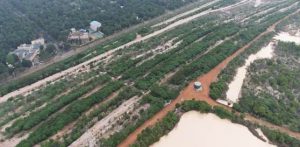
Open-cast lignite mining in Neyveli receives significant rainfall, averaging about 1200 mm annually. NLCIL has developed a comprehensive mine water utilisation and rainwater harvesting system to manage this resource effectively. The system includes 88 water harvesting structures covering 191.458 hectares. Through these efforts, 550 lakh litres per day of treated mine water are supplied to 40 surrounding villages for domestic and irrigation purposes. In addition, an agreement with the Tamil Nadu Water Supply and Drainage Board enables the supply of 425.10 lakh litres per day of water, benefiting 7.91 lakh people in six town panchayats and 625 villages of Cuddalore district.
Converting Overburden into Construction Material
NLCIL is also implementing the concept of “Wealth from Waste” by converting overburden material into useful construction aggregates. Research carried out jointly with IIT Madras through the Centre for Applied Research & Development has demonstrated that 40–60 percent sand can be recovered from overburden material. Pilot M-Sand beneficiation plants have already been installed in Neyveli mines to produce construction sand from mine overburden. An OB to M-Sand plant with a capacity of 2.62 Lm³ per annum was commissioned at Mine-IA in January 2024, followed by another plant with a capacity of 6.25 Lm³ per annum at Mine-I in February 2026.
Reviving Soil and Promoting Hi-Tech Agriculture
To improve soil fertility in reclaimed mine areas, NLCIL has introduced innovative agricultural practices. Hydroponic cultivation in polyhouses has been undertaken in collaboration with the Indian Institute of Science, Bengaluru. Israeli drip irrigation technology has also been adopted to enable water-efficient farming. Biological soil restoration has been promoted through livestock rearing with indigenous cattle to enrich soil with natural manure. These measures have helped convert previously barren overburden dumps into productive agricultural land.
Expanding Green Initiatives
Plantation drives and environmental awareness initiatives continue to form an integral part of NLCIL’s sustainability efforts. Since 2020, during the observation of Vriksharopan Abhiyan, 6,45,000 saplings have been planted and distributed. The company has also received first prize for ‘Swachhata Pakhwada’ among Coal PSUs from the Ministry of Coal for its work in cleanliness activities. It also implemented innovative initiatives under Special Campaign 4.0, focusing on the concept of “Transforming Waste into Wealth for Public Utility” and promoting the Gandhian ideology of self-reliance. The Pothigai Herbal Park, inaugurated on 30 October 2024 at Mine-I in Neyveli, covers 1.25 acres and contains around 38 species of medicinal plants. The park aims to create awareness about the medicinal benefits of common plants used in treating ailments. At Mine-II, the Lignite Garden was developed after clearing and levelling uneven land and removing about 109 metric tonnes of scrap. The reclaimed space now accommodates an ambulance parking area, FM yard mini repair shed and solar plant. Additionally, a coconut tree garden was developed, freeing a total of 8,15,000 square feet. In the Barsingsar Project in Rajasthan, the Lignite Sakthi Nagar Nursery was developed on previously unused land measuring about 6,700 square feet, with a capacity of around 6,000 plants. Under the theme of waste-to-wealth, NLCIL has also installed sculptures created from scrap materials. These include “Three Faces” in Cuddalore, “Peacock” in Chennai, “Jai Hind Chakra” in New Delhi, and “Miner Reading Book” at the NLCIL Arch Gate.
Supporting Sustainable Mining
The reclamation and eco-restoration efforts of NLC India Limited align with the broader vision of the Government of India to promote sustainable mining, ecological restoration and productive reuse of mined out land. Through these initiatives, the NLCIL continues to demonstrate that responsible mining and environmental conservation can go hand in hand, transforming mined landscapes into green, productive and community-benefiting ecosystems.